


Resident comfort
Energy decisions affect homes and shared spaces.
 Hotels & HospitalityGuest comfort and estate performance
 Office BuildingsOccupancy-led performance
 Retail & MallsTrading-hours intelligence
 UniversitiesCampus-wide energy decisions
 Wellness CentresWater, humidity and comfort
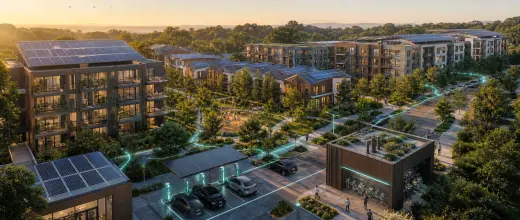 Residential CommunitiesHomes and shared infrastructure
 Airports & TerminalsContinuous terminal operations
 Data CentresCooling, power and resilience
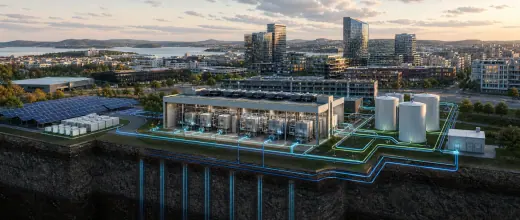 Utilities & District EnergyGeneration, storage and demand
 Ports & LogisticsCargo-linked energy operations
 ManufacturingProduction-linked intelligence
 Food & Cold ChainTemperature-assured optimisation
Coordinate homes, shared amenities, EV charging and district utilities across residential communities.
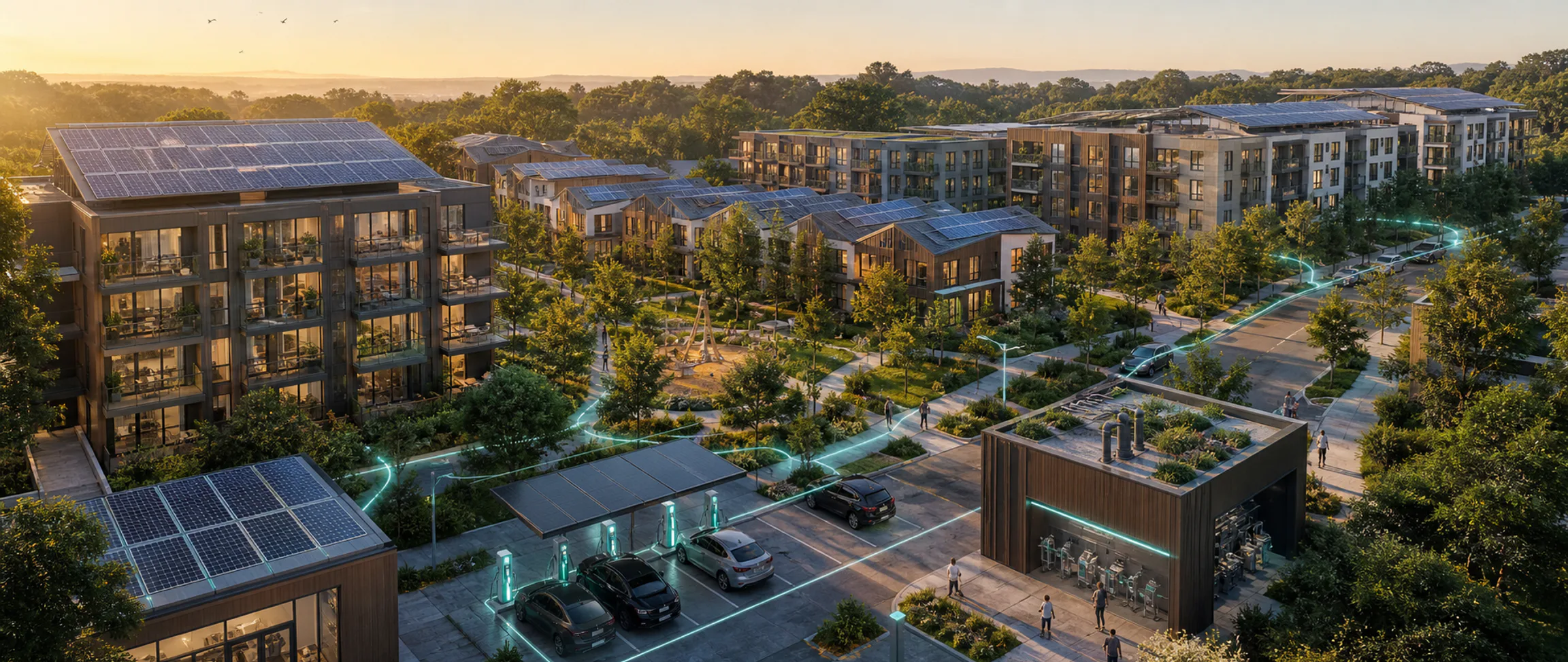
Energy decisions affect homes and shared spaces.
Common systems need fair operational visibility.
Homes, amenities and mobility overlap.
Appropriate data boundaries must be maintained.
Residential communities combine private demand with shared amenities, mobility and central systems. ENERGE TWIN creates an aggregated operating view while retaining the boundaries needed for fair allocation, privacy and practical action.
Fragmented dashboards can show individual signals without explaining how operations, assets and external conditions influenced them. ENERGE TWIN brings together available building and operational evidence so engineering, operations, sustainability and finance teams can work from a clearer shared position.
It supports investigation, scenario evaluation and outcome review while keeping assumptions, constraints and unavailable information visible. Material decisions remain subject to engineering judgement and organisational approval.
Bring together available assets, meters, systems and operating context.
Review demand and system behaviour across comparable periods.
Explore anomalies and identify where engineering attention is justified.
Compare operational and investment options before commitment.
Retain comfort, safety, resilience and service requirements.
Compare implemented results with the agreed operating reference.
Bring together available evidence without replacing existing systems.
Relate performance to the conditions that influenced demand.
Focus investigation where evidence supports attention.
Compare options with assumptions and constraints visible.
Retain engineering review and organisational approval.
Compare actual outcomes and strengthen the operating reference.
ENERGE TWIN can bring together available meter, building-system, asset, schedule, weather and relevant residential communities operating context. The exact evidence set depends on the estate and engagement.
No. It is designed to work with available systems and evidence, adding an operational decision layer rather than requiring a wholesale control-system replacement.
Yes, subject to a clear assessment of available evidence. Missing information is identified rather than presented as measured fact, and priorities can include improving evidence coverage.
Yes. Teams can compare operational or investment options using stated assumptions and constraints. Scenario outputs support review; they are not performance guarantees.
Yes. Portfolio comparison is most useful when operating context, boundaries and evidence quality are made comparable across residential communities assets.
Discuss your estate, evidence and priority decisions with the ENERGE TWIN team.