










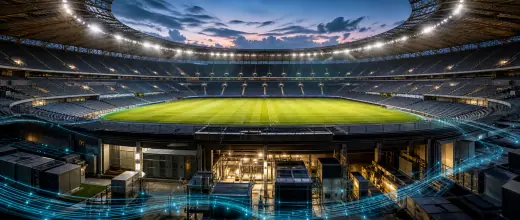
A practical route from operating evidence to a defensible decision.
This guide turns the subject into four connected questions. Use it to structure a team discussion, challenge assumptions and agree what must be verified after action.
✓Define verification before implementation begins.
✓Adjust expected performance for actual operating conditions.
✓Report outcomes with uncertainty, exclusions and evidence lineage.
Verification is part of the decision
A recommendation is incomplete without an agreed method for checking what happened after implementation.
Adjust for real operating conditions
Weather, occupancy, production and schedules may differ from the scenario. Verification should account for those changes rather than claim the raw difference as savings.
Preserve evidence lineage
Keep measured, derived and modelled information distinguishable. Document exclusions, data gaps and changes to the method.
Return outcomes to the model
Observed performance should refine baselines, assumptions and future scenarios so the Digital Twin remains operational.
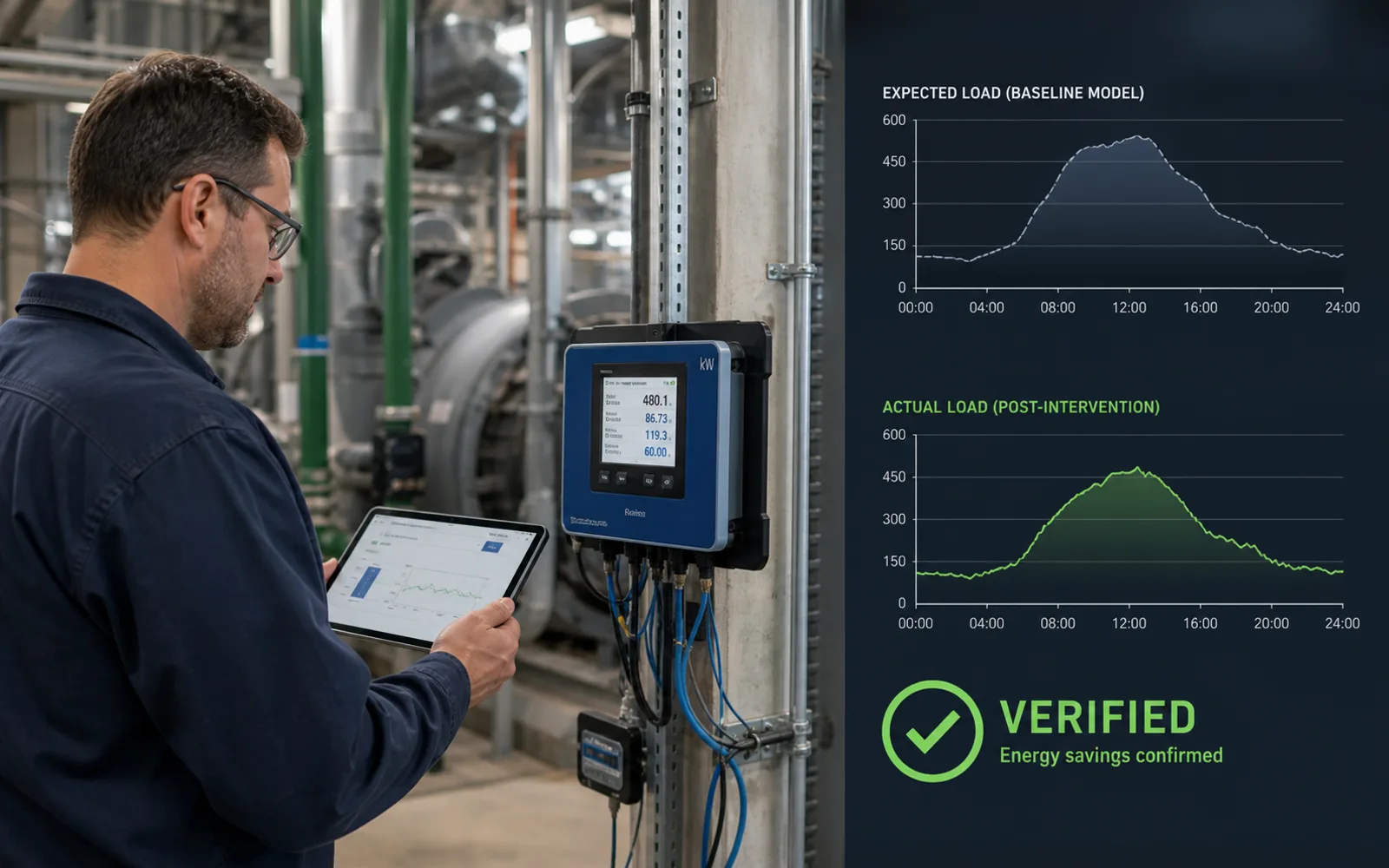
Expected-versus-actual verification record
Chiller optimisation after commissioning
The initial meter difference indicated an 18% reduction. Normalising for cooler weather and reduced weekend occupancy produced a verified range of 10–13%. Comfort complaints remained within the agreed threshold, while two weeks of missing BMS data were disclosed as a confidence limitation.
Before this decision moves forward
01Freeze the approved baseline and method.
02Record the intervention and commissioning date.
03Collect actual operating conditions.
04Compare expected and actual performance.
05Return results and exceptions to the model.
Carry the evidence through the full decision.
Agree the reference position and name material gaps.
Compare options under consistent conditions and visible assumptions.
Measure what happened and return the outcome to the operating model.